
March, 2026 – A Change in Shipbuilding Strategy Opens a Door to Innovative Acquisition:
By Vice Admiral (retired) William Landay III
When the United States pivoted significant military focus to the Indo-Pacific region it created operational needs vastly different from the littoral focus of previous decades. This is particularly true with Anti-Submarine Warfare (ASW). Since that initial pivot, the need for enhanced undersea domain awareness has also increased in the Atlantic, Mediterranean and Southern Command theaters of operations as adversaries grow increasingly aggressive.
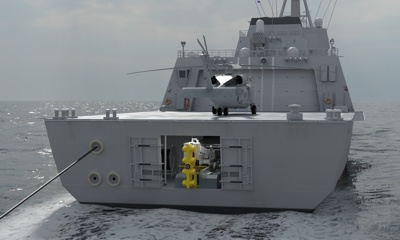
 The U.S. Navy currently has outstanding capability in ASW. The challenge is that most of this capability resides in high-end combatants and submarines, such as the DDG 51 Arleigh Burke class and the Virginia SSNs. These platforms are extremely capable but are tasked with multiple missions in addition to ASW. For example, air defense may require the ship to operate near the strike group, while long-range ASW is best conducted well ahead of the strike group. The FFG program was intended to provide relief to this challenge by bringing needed capability focused on fewer areas, such as long-range ASW, at a lower cost.
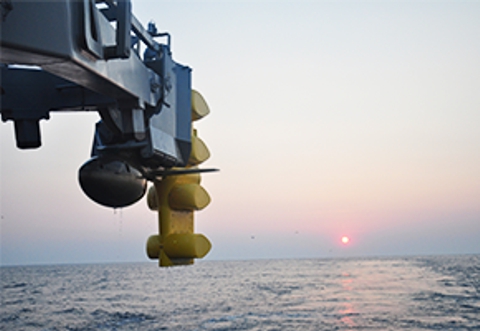
Long-range, variable depth sonar is among the most-needed capabilities by the Navy and was one of the key requirements of the FFG program. The long-range, variable depth sonar, termed CAPTAS, that was slated to be installed in the FFG is already in service on a number of NATO ships and is uniformly praised for performance. In fact, French ships that have the system won two Sixth fleet Hook EM awards for best ASW performance.
The decision to cancel the FFG program would seem to result in the loss of this capability for the foreseeable future, meaning it will not be available in the desired 2027 timeframe. But the increased emphasis on innovative acquisition approaches may enable a path forward that could provide needed capability earlier and in greater numbers than the original FFG build schedule provided.
Under the FFG program, two of the long-range, variable depth sonar systems have already been delivered to the shipyard, and the third and fourth are now complete and ready for delivery. Contract options for additional units are in place, and facilities exist in the U.S. to build up to five systems per year. The Navy just needs to find a way to get them to sea.
Fortunately, there are platforms that currently exist and are entering the fleet in greater numbers Unmanned Surface Vessels (USVs) as well as commercial vessels of opportunity (VOOs) can support long-range, variable depth sonar operations. The Navy and industry have demonstrated a containerized version of the system, installing and removing it from a commercial supply boat as a proof of concept. With the critical sensor capability decoupled from specific platform build schedules and the adaptability of a containerized system, the Navy has much greater flexibility to acquire and deploy these units.
This is where the established policies for meeting urgent needs, including tools like Other Transaction Authorities emerge as a key enabler to accelerate antisubmarine warfare capacity. Using these levers for accelerated acquisition allows the Navy to rapidly pivot its acquisition strategy, taking advantage of a proven system that they have already procured and getting it to the fleet faster than originally planned.
The cancellation of the Constellation program may ultimately enable the Navy to deliver a critical capability to the fleet more quickly and in greater numbers than the original plan. Variable depth sonar, coupled with the Navy s great work in developing and maturing USV reliability, autonomy and concepts of operation, provides all the pieces needed to make this work. Rapid delivery will take innovative acquisition thinking, imaginative approaches by the contracting community, and a strong commitment to getting the Fleet the capability they asked for. All the pieces are there, they just need to be put together.
ABOUT THE AUTHOR
Vice Adm. Landay graduated from the United States Naval Academy and was commissioned an ensign in 1978. Landay holds a Bachelor of Science in Systems Engineering from the Naval Academy, a Master of Science in Systems Technology (C4I) from the Naval Postgraduate School and is a graduate of the Program for Management Development at the Harvard Business School. As a flag officer, Landay served as the program executive officer for Littoral and Mine Warfare. In January 2006, he became the 21st chief of Naval Research. Landay became director of the Defense Security Cooperation Agency in August 2010 prior to his retirement from active service.
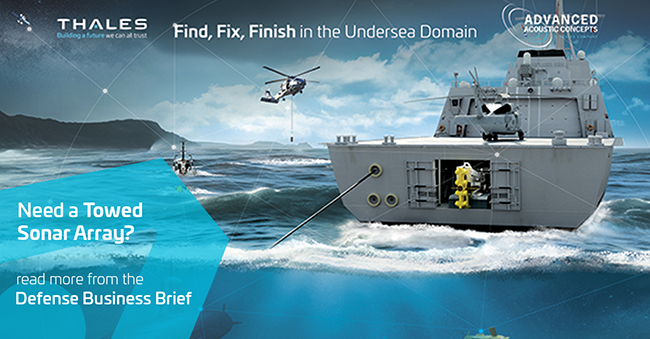 Anybody need a towed sonar array? Thales has been brainstorming how to repurpose some that were designed for the U.S. Navy, but the service
  Advanced Acoustic Concepts (AAC) announced it has been appraised at Maturity Level 3 of ISACA’s Capability Maturity Model Integration (CMMI) for Development. This prestigious achievement, conducted by an independent appraiser, underscores AAC’s dedication to process excellence, continuous improvement, and delivering high-quality solutions to its customers.
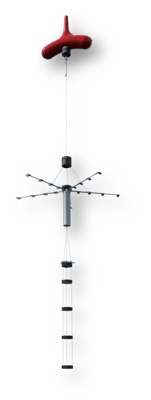 The SonoFlash mid-frequency combination active/passive sonobuoy Critical Design Review (CDR) was held the week of December 2, 2024. AAC representatives traveled to Sofia, France to witness briefs and an in-water acoustic test at Lake Castillon Reservoir. They were joined by Shawn Horigan, OPNAV N98 Air Warfare Division Sonobuoy Requirements Officer. The briefs and demonstration were conducted by both the French Direction Générale de l’armement (DGA) Program Director and Technical Director of Thales Program Management and Engineers.